

Modern Farmhouse Table Linen Ideas: A 2026 Guide
Table of Contents
- What Makes Modern Farmhouse Table Linens Stand Out
- Choosing the Right Fabric: Cotton, Linen, and Natural Fibers
- How to Choose Tablecloth Size for Your Table Shape
- Farmhouse Table Runner Ideas to Layer Your Tablescape
- Linen Napkin Styling Tips and Placement Techniques
- Color Palettes and Pattern Mixing for Modern Farmhouse Tables
- Seasonal Table Setting Ideas and Centerpiece Styling
- Maintaining and Caring for Farmhouse Table Textiles
- Frequently Asked Questions
Last Updated: October 4, 2026
What Makes Modern Farmhouse Table Linens Stand Out
Modern farmhouse table linen ideas blend rustic charm with contemporary simplicity, creating dining spaces that feel both warm and refined. We've curated collections that capture this aesthetic through thoughtful fabric choices, layered textures, and intentional color coordination. The key difference between generic country décor and truly modern farmhouse styling lies in restraint: rather than overwhelming your table with patterns, modern farmhouse emphasizes quality textiles, neutral foundations, and strategic accent pieces that invite conversation and connection.
What sets modern farmhouse apart from purely rustic or cottage styles is its focus on natural fibers and timeless patterns that age gracefully. A well-chosen farmhouse table runner or set of linen napkins becomes part of your home's story, not just seasonal decoration. The aesthetic works because it honors simplicity without sacrificing personality.
Choosing the Right Fabric: Cotton, Linen, and Natural Fibers
The foundation of any modern farmhouse tablescape begins with understanding your fabric options. Cotton homespun and natural linen each bring distinct qualities to your table setting, and the choice depends on your lifestyle, budget, and aesthetic priorities.
Cotton Homespun and Woven Textures
Cotton homespun fabrics deliver the tactile warmth that defines modern farmhouse style. These tightly woven cottons feature visible texture and a slightly irregular surface that catches light beautifully, giving your table an authentically handcrafted appearance even when the linens are machine-made.
Woven cotton placemats and table runners work exceptionally well in everyday settings because they're durable and forgiving. A cotton textile can handle frequent washing without losing its character, making it ideal for families who prioritize function alongside aesthetics. The Wicklow Check Yarn Placemat in Black & White exemplifies this approach: the woven check pattern adds visual interest while the yarn construction creates subtle depth that photographs beautifully in natural light. At 13" x 22", it layers perfectly under larger plates while leaving room for folded napkins and glassware.

Cotton also accepts dyes differently than linen, producing richer, more saturated colors. If you're drawn to deep wine tones or charcoal accents, woven cotton delivers those hues with consistency.
Natural Linen for Elevated Rustic Dining
Natural linen carries an inherent elegance that pure cotton sometimes lacks. Linen wrinkles intentionally, and those soft creases become part of its charm rather than a flaw to eliminate. For tables where you want to signal "intentional" rather than "casual," linen is your answer.
Linen napkins and tablecloths drape differently than cotton, creating graceful folds that elevate even simple place settings. The fiber's natural slubs and irregular weave give linen an artisanal quality that speaks to quality and authenticity. Linen also breathes exceptionally well, making it practical for warm-weather entertaining when guests linger at the table.
The trade-off: pure linen costs more than cotton and requires slightly more deliberate care. However, linen improves with age, softening and becoming more beautiful after each wash.
How to Choose Tablecloth Size for Your Table Shape
Selecting the correct tablecloth dimensions prevents your table from looking either swallowed by excess fabric or awkwardly bare. The right fit depends on your table's shape and whether you're layering with a runner or placemats.
For rectangular tables, measure length and width, then add 12-18 inches to each dimension for a standard drop that reaches just below the seat. This creates visual balance and prevents guests from having fabric pooling at their legs. Round tables require adding 18-24 inches to the diameter for proper coverage.
Square tables present a distinct styling opportunity: a square tablecloth in a coordinating pattern or solid color creates clean lines that complement modern farmhouse aesthetics.
Consider your table's finish when choosing coverage. If you have a beautiful wood surface you want to showcase, opt for a smaller cloth or runner-and-placemat combination. Modern farmhouse celebrates the table itself as part of the design, not something to hide completely.
Farmhouse Table Runner Ideas to Layer Your Tablescape
A farmhouse table runner anchors your entire table setting while allowing the underlying wood or tablecloth to remain visible. Runners create visual flow and provide the perfect vehicle for introducing secondary patterns or textures.
The most effective approach layers a runner over a solid or subtly patterned base cloth. A cream or oatmeal tablecloth with a black-and-white plaid or gingham runner creates immediate visual interest without chaos. The runner should be 12-16 inches wide and long enough to drape 6-8 inches on each end of the table.
Consider your table's proportions when selecting runner length. For a standard 36" x 60" dining table, a 60-72" runner maintains proper proportion. For smaller accent tables or console surfaces, a 36-48" runner works better.
Texture layering elevates runner styling beyond color alone. A woven cotton runner over a linen tablecloth, or vice versa, creates tactile depth that invites guests to notice and appreciate the craftsmanship. Modern farmhouse embraces this interplay of textures as part of the overall aesthetic.
Linen Napkin Styling Tips and Placement Techniques
Napkins deserve as much attention as larger pieces because they're the linens your guests actually touch and notice. Linen napkins in particular signal thoughtfulness and elevate even casual meals into intentional gatherings.
Fold napkins simply: a basic triangle or rectangle fold works best for modern farmhouse tables. Avoid elaborate origami-style folds that obscure the fabric's natural beauty. A linen napkin folded loosely and placed to the left of the plate, or casually draped across the plate itself, communicates confidence in your styling choices.
Coordinate napkin colors with your table runner or placemats while allowing subtle variation. If your placemats feature a black-and-cream check, napkins in solid cream or a complementary plaid add depth without visual competition. A set of four to six napkins in coordinating patterns gives you flexibility for different occasions.
Size matters: standard dinner napkins measure 20" x 20", while smaller luncheon napkins run 16" x 16". Dinner napkins work for everyday tables and feel generous; luncheon napkins suit casual breakfasts or smaller gatherings.
Wicklow Check Backed Placemat - Black & Cream →
Color Palettes and Pattern Mixing for Modern Farmhouse Tables
The most sophisticated modern farmhouse tables rely on restrained color palettes that create cohesion while allowing individual pieces to shine.
Neutral Palettes and Monochromatic Schemes
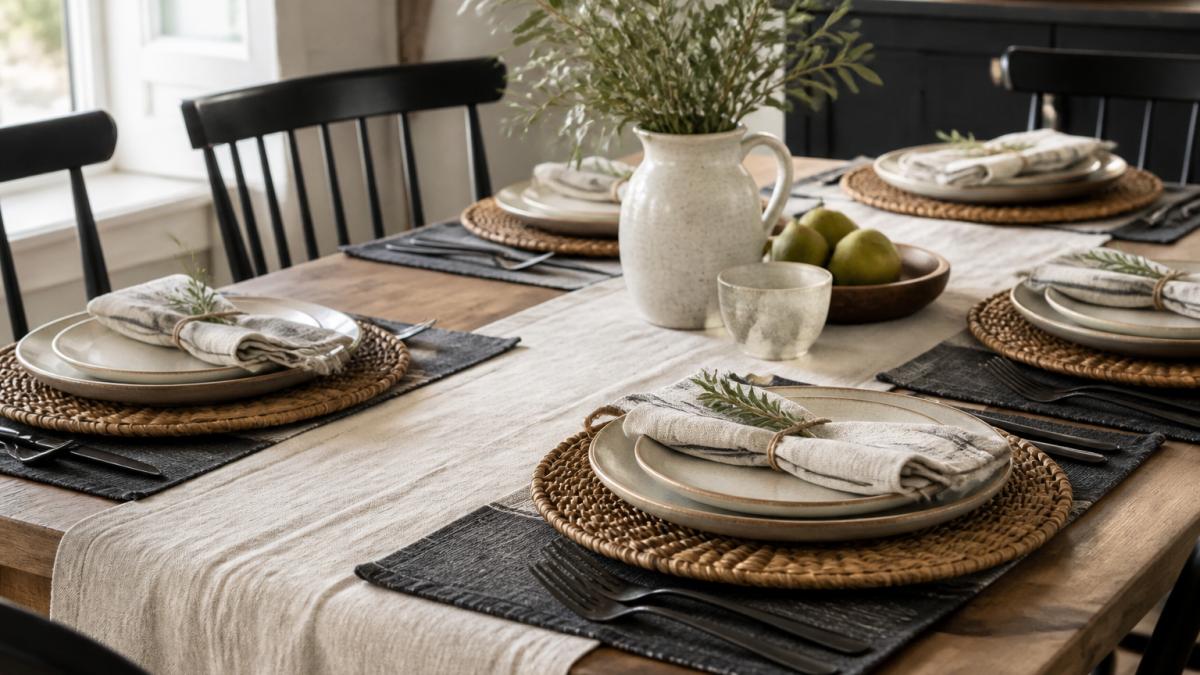
Neutral doesn't mean boring. A monochromatic approach using cream, oatmeal, taupe, and charcoal creates visual interest through texture variation alone. A cream tablecloth paired with a taupe runner and charcoal placemats, all in different weaves, achieves depth and sophistication without introducing competing colors.
This approach works particularly well for tables you style frequently, because neutral linens pair with any seasonal centerpiece or dinnerware. Cream and white foundations accept fresh flowers, greenery, or minimal styling without feeling sparse.
Mixing Gingham, Plaid, and Geometric Patterns
Pattern mixing requires one guiding principle: vary the scale of your patterns. Small-scale gingham pairs beautifully with larger plaid or geometric designs because the eye can distinguish each pattern rather than experiencing visual noise.
The Wicklow Check Backed Placemat in Black & Cream introduces a classic gingham foundation that pairs with virtually any secondary pattern. Layer it with a larger-scale plaid runner or a geometric patterned tablecloth, and the combination feels intentional rather than chaotic. The key is limiting yourself to two primary patterns plus one solid accent color.
Wine and cream combinations create warmth while maintaining modern farmhouse simplicity. The Sturbridge Placemat in Wine features a woven plaid that reads as sophisticated rather than country-cute, making it suitable for both casual family dinners and entertaining guests. Pair it with cream napkins and a neutral runner for balanced styling.

Seasonal Table Setting Ideas and Centerpiece Styling
Modern farmhouse tables transform seasonally through simple centerpiece changes while keeping core linens consistent. This approach maximizes your investment in quality textiles while keeping your table feeling fresh.
Spring calls for pale linens with subtle green accents and fresh florals. Summer tables brighten with cream and white foundations, allowing natural light to showcase linen texture. Fall introduces warm neutrals, deeper plaids, and harvest-inspired centerpieces. Winter embraces cream and charcoal with evergreen accents and candlelight that highlights fabric weaves.
Centerpieces should never overwhelm place settings. A simple wooden bowl with seasonal fruit, a low arrangement of greenery, or a collection of varying-height candles in glass holders maintains the modern farmhouse principle of intentional simplicity. Your linens should remain the visual anchor, with centerpieces playing a supporting role.
Consider table height when styling: low centerpieces (under 12 inches) allow conversation across the table. Tall arrangements work only for console tables or when guests won't be dining directly across from them. Modern farmhouse celebrates function alongside beauty.
Maintaining and Caring for Farmhouse Table Textiles
Quality linens require thoughtful care to maintain their appearance and extend their lifespan. Understanding proper washing and stain removal techniques protects your investment.
Stain Removal for Natural Fibers
Natural fibers like linen and cotton homespun respond best to immediate treatment. Blot fresh stains rather than rubbing, which pushes the stain deeper into fibers. For wine or fruit stains, cold water rinses work better than hot, which can set protein-based stains.
A paste of baking soda and cold water applied to the stain and left for 30 minutes often lifts discoloration before washing. For stubborn stains, white vinegar or lemon juice applied directly to the affected area provides gentle bleaching action without the harshness of chlorine bleach, which can weaken natural fibers over time.
Test any treatment on an inconspicuous corner first. Some modern farmhouse linens feature dyes that shift under harsh chemicals, so conservative approaches preserve color integrity.
Washing and Wrinkle-Resistant Care
Wash farmhouse linens in cool water with mild detergent designed for delicate fabrics. Machine washing on a gentle cycle works fine for most pieces; hand washing reserves itself for truly special occasion linens or those with delicate embroidery or trim.
Wrinkles in linen and cotton homespun are part of the aesthetic, not flaws requiring elimination. However, if you prefer crisper linens, a light spray starch applied before ironing helps without stiffening the fabric.
Store clean linens in a cool, dry place away from direct sunlight, which fades colors over time. Rolling linens rather than folding them tightly prevents permanent creases.
Creating a modern farmhouse table that reflects your personal style starts with quality linens that you genuinely enjoy using. Our curated collection of farmhouse table linen ideas, from the classic Sturbridge Placemat in Wine to the versatile Wicklow Check options, gives you foundation pieces that work year-round while remaining flexible enough for seasonal updates.
Frequently Asked Questions
What fabrics work best for a modern farmhouse table linen aesthetic?
Cotton homespun, woven cotton, and natural linen are the foundation of farmhouse table styling. Cotton offers durability and easy care, while natural linen brings texture and an elevated rustic feel. Look for fabrics with visible weaves, gingham patterns, or subtle plaid designs. Park Designs offers quality options like the Wicklow Check Yarn Placemat in Black & White and Sturbridge Placemat styles that blend traditional country aesthetics with everyday practicality.
How do you layer table linens to create depth in a farmhouse tablescape?
Start with a base tablecloth in a neutral or solid color, then add a table runner down the center for visual interest. Layer placemats on top, and finish with folded napkins at each place setting. Mix textures by pairing smooth cotton with woven pieces. The key is varying heights and patterns without overwhelming the table. Try a cream tablecloth with a black plaid runner and gingham placemats for classic farmhouse layering that feels intentional rather than cluttered.
How do I know what size tablecloth to choose for my dining table?
Measure your table length and width, then add 12 to 15 inches to each dimension for a standard drop that reaches just below the table edge, creating an elegant drape. For round tables, measure the diameter and add 12 to 15 inches. For modern farmhouse styling, a modest 8- to 12-inch drop looks more intentional than an oversized puddle. If you prefer your tablecloth to hang to the floor (about 28 to 30 inches), measure from the top of the table to the floor and add your table dimensions.
What's the difference between DIY and store-bought farmhouse linens in terms of cost and quality?
Store-bought curated pieces like Park Designs placemats ($7-$8.99) offer consistent quality, durability, and authentic farmhouse patterns that are hard to replicate at home. For hobbyists and busy homeowners, ready-made linens provide reliability and professional finishes.