

How to Choose Needles for Hand Quilting Delicate Fabric
Last Updated: October 26, 2026
Quick Summary
For hand quilting delicate fabric, size 10 betweens are the most popular choice across all skill levels, offering small, precise stitches that work beautifully on fine fabrics while remaining forgiving enough for developing quilters. Size 9 betweens provide a good starting point if you're new to hand quilting delicate fabric, while size 11 and 12 betweens deliver finer results for experienced quilters.
- Size 10 betweens are the most popular choice for hand quilting delicate fabric across all skill levels
- Higher needle numbers mean shorter, finer needles; size 8 is longer and thicker than size 12
- Betweens have slightly rounded points that separate fibers rather than piercing them, making them gentler on delicate weaves
- Consistent, gentle tension prevents puckering better than pulling hard on each stitch when working with delicate fabric
- Hold the needle at a shallow angle of 45 degrees or less to reduce pressure on delicate fibers
Table of Contents
- Understanding Hand Quilting Needles for Delicate Fabric
- Types of Needles Used in Hand Quilting
- Hand Quilting Needle Size Guide: Finding Your Fit
- Quilting Betweens Sizes for Delicate Fabrics
- Hand Sewing Needles for Delicate Fabric: Preventing Damage
- How to Hand Quilt Without Puckering on Delicate Layers
- Testing and Troubleshooting Needle Performance
- Selecting Your First Needles for Delicate Hand Quilting
- Frequently Asked Questions
Understanding Hand Quilting Needles for Delicate Fabric
Choosing a needle for hand quilting delicate fabric involves considering needle types, sizes, and how they interact with fine materials.
Types of Needles Used in Hand Quilting
The needle you choose depends on your fabric weight, your stitch preference, and the specific technique you're using.
Betweens: The Standard Choice
Betweens are the gold standard for hand quilting. These short, sturdy needles have a small eye and a slightly rounded point designed specifically for the rocking stitch motion that quilters use. Betweens range from size 8 to size 12, with higher numbers indicating shorter, finer needles.
Sharps and Milliner Needles for Precision
Sharps are longer than betweens with a slightly more acute point. They work well if you prefer a different hand position or if you're doing detailed work that requires a longer reach. Sharps range in size from 8 to 12, matching between sizing.
Specialty Options: Sashiko and Appliqué Needles
Sashiko needles are longer and stronger than betweens, with a slightly larger eye. Originally designed for Japanese sashiko embroidery, they work for quilters who like a longer needle and don't mind a slightly larger point.
Hand Quilting Needle Size Guide: Finding Your Fit
Needle size matters more than most quilters realize. The number on the package tells you the needle's length and thickness, but the relationship isn't always intuitive.
Sizing Conventions and What the Numbers Mean
Hand quilting needles use a numbering system where higher numbers mean shorter, finer needles. A size 8 between is longer and thicker than a size 12. A size 10 falls in the middle.
Matching Needle Thickness to Fabric Weight
Avoid pairing delicate fabrics with size 8 needles unless you're working with very thick batting or multiple layers that demand a sturdier shaft. The thicker needle creates larger holes that become visible in fine weaves.
Quilting Betweens Sizes for Delicate Fabrics
Size 9 betweens offer a middle ground. They're fine enough for delicate work but sturdy enough that you won't worry about bending the needle under normal quilting pressure. If you're new to hand quilting delicate fabric, start here.
Size 10 betweens are the most popular choice across all quilting skill levels. They're small enough for precise stitching and delicate enough for fine fabrics, yet forgiving enough for developing quilters.
Size 11 betweens demand more hand strength and needle control but reward you with finer, more precise stitches. They work beautifully on delicate fabrics once you've developed your technique.
Size 12 betweens are the finest option. Use them when you want maximum precision and minimal fabric disturbance. They're best for experienced quilters working on special projects.
Betweens come in four main sizes, each suited to different skill levels and fabric requirements.
| Size | Best For | Key Characteristic |
|---|---|---|
| Size 9 | Beginners on delicate fabric | Fine enough yet sturdy enough |
| Size 10 | Most quilters | Small and precise, forgiving |
| Size 11 | Experienced quilters | Demands more control, finer stitches |
| Size 12 | Special projects, experienced | Maximum precision, minimal disturbance |
Hand Sewing Needles for Delicate Fabric: Preventing Damage
The right needle prevents the damage that ruins delicate quilting projects: puckers, snags, holes, and pulled threads. Understanding how needles interact with fine fibers helps you make choices that protect your work.
Needle Point and Fabric Interaction
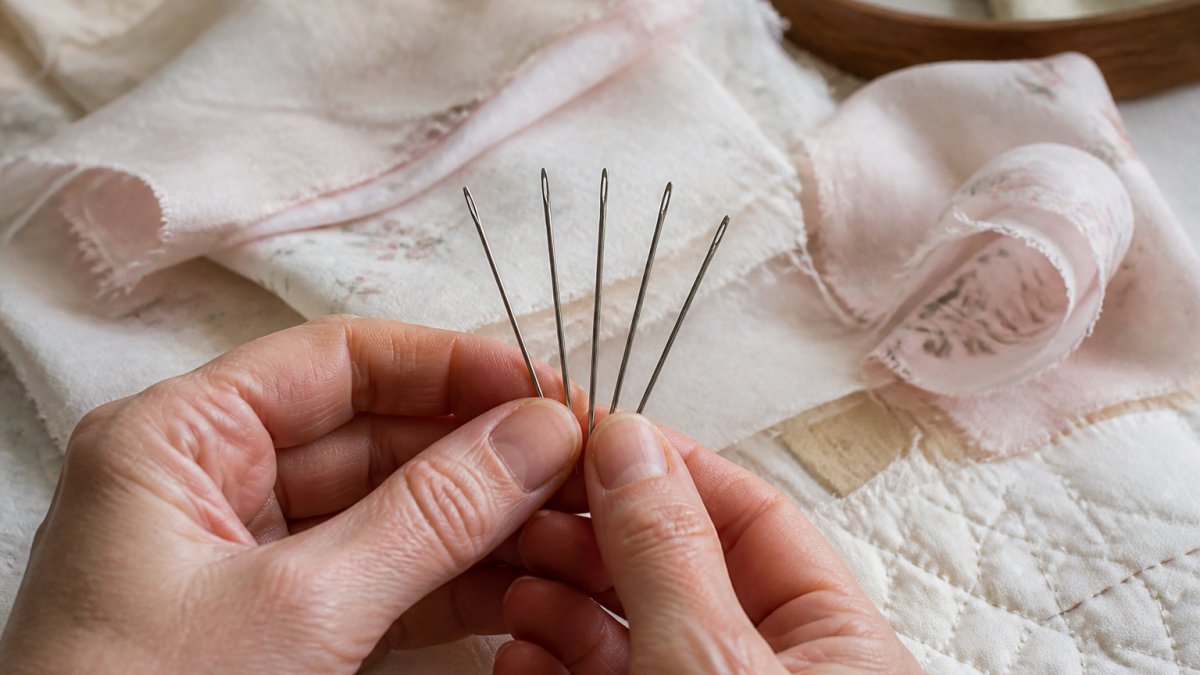
The needle's point shape determines how it enters fabric. A rounded point separates fibers rather than piercing them, which is gentler on delicate weaves. Betweens have slightly rounded points designed for this purpose.
Thread and Needle Pairing for Fine Fabrics
Your thread choice works hand-in-hand with needle selection. Thinner thread paired with a fine needle creates the least disturbance in delicate fabric.
How to Hand Quilt Without Puckering on Delicate Layers
Puckering happens when you pull thread too tightly or when needle and thread don't move smoothly through fabric layers. Delicate fabrics are more prone to puckering because their thinner fibers compress more easily.
Controlling Stitch Length and Tension
Consistent tension is more important than stitch length on delicate fabric. Many quilters assume smaller stitches require tighter tension. In fact, the opposite is often true. Gentle, even tension prevents puckering better than pulling hard on each stitch.
Needle Handling and Rocking Stitch Technique
Your hand position and needle movement directly affect fabric stress. Hold the needle at a shallow angle to the fabric surface, typically 45 degrees or less. A steeper angle increases pressure on delicate fibers.
Testing and Troubleshooting Needle Performance
A common mistake is assuming a needle is "too fine" if it feels delicate in your hand. Size 11 and 12 betweens are designed to feel this way. They won't break with normal quilting pressure, they'll simply give you finer results.
Selecting Your First Needles for Delicate Hand Quilting
Hancocks Paducah Alternatives for Quilters provides broader context on quilting fabric alternatives that complements needle selection guidance. When you're ready to invest in your fabric collection, Things Fabric offers Choice Fabrics Supreme 80 20 Cotton Poly Batting Twin Size Natural and Quilters Calicos Crazy Daizy Lilac With Blue Dot Cotton Fabric 328.
Frequently Asked Questions
What needle size should I use for hand quilting delicate fabric?
For delicate fabric, use sizes 8, 9, or 10 betweens. Size 10 is the finest and works best for lightweight cottons and silk blends that require minimal penetration. Size 8 offers slightly more control if you're new to delicate work. The smaller the number, the longer the needle; smaller sizes reduce fabric stress and snagging. Test on fabric scraps first to ensure smooth passage without creating visible holes.
Are quilting betweens suitable for delicate fabric?
Yes, quilting betweens are ideal for delicate fabric. Their short length and round eye provide excellent control and reduce the force needed to push the needle through layers. Betweens allow for the tight, even stitches that delicate quilts require. Pair them with fine thread to minimize fabric distortion. Sharps work too, but betweens give better control over stitch length on fragile materials.
How can I hand quilt without puckering delicate fabric?
Prevent puckering by using a fine needle (size 9 or 10), matching thread weight to fabric, and maintaining consistent, gentle tension. Use the rocking stitch technique with a thimble to control needle angle and pressure. Keep stitches short and even, typically 1/8 inch or smaller. Ensure your quilt sandwich (batting and backing) is properly basted to prevent shifting. Test your tension on a practice piece before starting the main quilt.
What's the difference between hand quilting needles and regular sewing needles?
Hand quilting needles (betweens) are shorter and have smaller eyes than regular sewing needles (sharps), allowing better control through multiple layers. The shorter length reduces hand fatigue and gives you more precision on stitch placement. Betweens are specifically designed for the rocking stitch used in quilting. Regular sewing needles are longer and better for single-layer hand sewing like binding. Using the correct needle type prevents frustration and produces cleaner stitches.
Choosing needles for hand quilting delicate fabric doesn't have to feel overwhelming. Start with a size 10 between, test it on practice fabric, and adjust based on your results. Things Fabric carries the delicate quilting cottons and specialty fabrics that deserve the right needle choice. Explore our collection and find materials that inspire your next quilting project.
