

Best Quilting Cotton for Modern Quilts: 2026 Guide
Table of Contents
- What Makes Quilting Cotton 'Modern'
- Quilting Cotton Thread Count Guide: What the Numbers Mean
- Best Solid Quilting Cotton Brands for Modern Quilts
- How to Choose Fabric for Modern Quilts: A Decision Framework
- Color Fastness, Shrinkage, and Pre-Washing
- Digital Print vs. Screen Print Quality
- Sustainability and Organic Certifications
- Frequently Asked Questions
Last Updated: October 3, 2026
What Makes Quilting Cotton 'Modern'
Walk into any quilt shop and ask for the best quilting cotton for modern quilts, and you'll get a different answer from every person behind the counter. That's not because quilters disagree on quality.
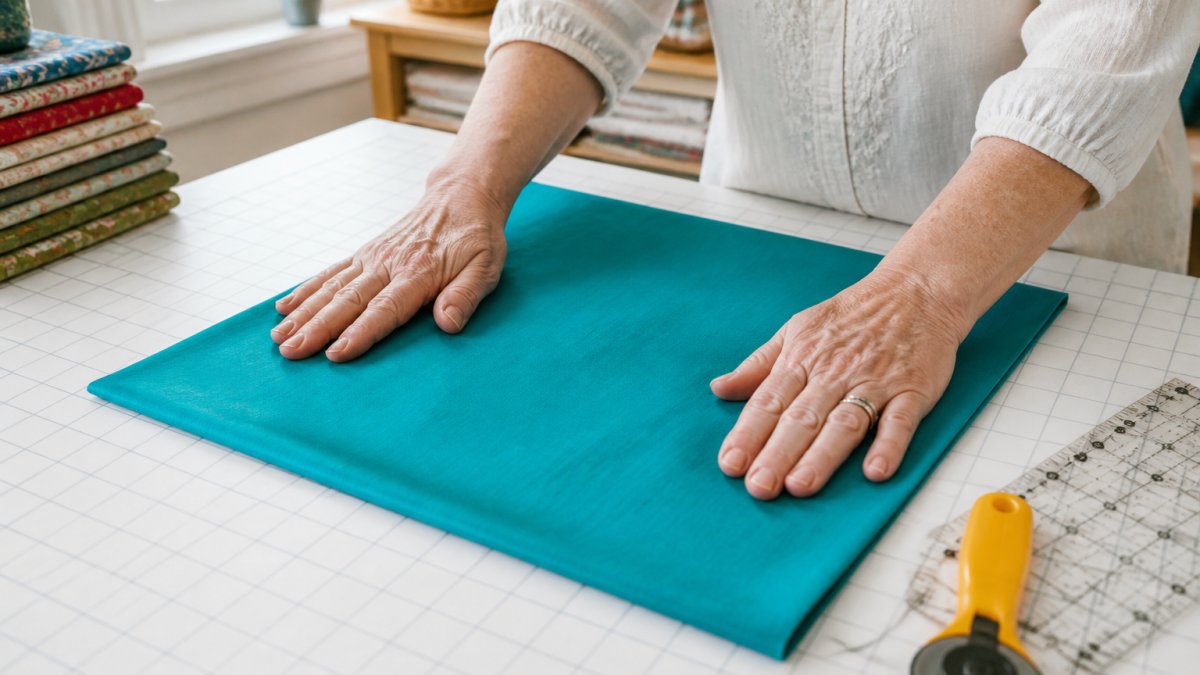
This guide from Things Fabric breaks down what actually separates a modern quilting cotton from a traditional one, from thread count and fabric weight to color fastness and shrinkage. We've spent over two decades helping quilters match fabric to pattern, and the questions we hear most often are the ones this guide answers.
Modern quilting itself is a design style built on negative space, bold geometric patterns, and solid color blocking rather than the dense, repeated prints of traditional quilting.
Modern vs. Traditional Fabric Designs
Traditional quilting cotton leans on reproduction prints: small calicoes, florals, and period-inspired motifs that read as busy when cut into large shapes. Modern quilting cotton favors solids, low-volume prints, and graphic geometric patterns that hold their shape when pieced into oversized blocks.
The practical difference shows up in how a fabric behaves on the design wall. A dense floral print can hide imperfect seam matching. A solid cannot.
The Role of 100% Cotton Composition
A quilting cotton that isn't 100% cotton will fight you at every stage. Blends with polyester resist a crisp press, which makes piecing and binding harder to keep flat. Blends also pill along seam lines after repeated washing, and pilling shows up most on solid fabrics where there's no print to disguise it.
Check the selvage for fiber content before you buy. If a bolt doesn't state 100% cotton, assume it isn't.
Quilting Cotton Thread Count Guide: What the Numbers Mean
Thread count tells you how many threads are woven into one square inch of fabric. For quilting cotton, the useful range sits between 60 and 80 threads per inch. Below 60, the weave is loose enough that fraying and seam slippage become real problems.
Higher isn't automatically better here, which is the part most buying guides get wrong. A 200-thread-count sheet is softer than a 100-thread-count sheet. A 200-thread-count quilting cotton would be closer to cardboard.
| Thread Count | Weave Feel | Best For | Watch Out For |
|---|---|---|---|
| 60-70 | Softer, more drape | Hand quilting, garments | Fraying on tight curves |
| 70-80 | Crisp, holds a press | Piecing, rotary cutting | Slightly stiffer hand-feel |
| 80+ | Dense, board-like | Structured bags, not quilts | Needle skipping, skipped stitches |
Fabric Weight and Hand-Feel
Fabric weight for quilting cotton typically lands around 4 to 4.5 ounces per square yard. Hand-feel describes how the fabric feels in your hand, and it's the quality you can't judge from a screen.
A fabric that feels slick and papery usually has a high synthetic content or a heavy sizing finish that will wash out. A fabric that feels soft but flimsy will stretch when you piece it.
Best Solid Quilting Cotton Brands for Modern Quilts
Solids do more work in modern quilts than any other fabric category. They carry the negative space, define the graphic shapes, and set the color story. A weak solid ruins the whole composition, and the difference between a good one and a great one comes down to fiber quality and dye consistency.
What to Look for in a Solid
Look for long-staple cotton, which produces a smoother, stronger yarn with less pilling than standard short-staple cotton. Long staple length also means fewer fiber ends poking through the weave, which keeps solid colors looking clean rather than fuzzy.
Color consistency across dye lots matters just as much. If you're buying yardage for a large quilt, buy all of it at once from the same bolt or dye lot.
Things Fabric stocks a curated range of quilting cottons and crafting patterns with a farmhouse sensibility. Shop online or stop in during store hours for local pickup.
How to Choose Fabric for Modern Quilts: A Decision Framework
Start with the pattern. A pattern built on large graphic shapes needs fabrics with high contrast and minimal visual texture. A pattern with dense piecing can absorb busier prints without turning muddy.
Next, pick the background. In modern quilting, the background is usually a solid in white, gray, or a low-saturation color.
Then balance prints against solids. A common approach is roughly two-thirds solids to one-third prints, though the ratio shifts with the pattern. Finally, confirm washability.
Color Fastness, Shrinkage, and Pre-Washing
Color fastness describes how well a dye stays bonded to the fiber through washing, light exposure, and abrasion. Shrinkage describes how much the fabric contracts when it gets wet. Both are predictable, and both are manageable if you test before you cut.
Pre-washing is the standard defense against both problems. It removes the sizing finish, pre-shrinks the cotton, and reveals any excess dye before that dye can transfer to your other fabrics.
Preventing Fabric Bleeding in High-Contrast Quilts
High-contrast quilts, especially those pairing deep reds, blues, or blacks with white, are the most vulnerable to bleeding. A color catcher sheet in the wash absorbs loose dye before it can settle into lighter fabric.
Test every saturated fabric before it goes into a quilt. Cut a small square, soak it in warm water for 30 minutes, and lay it on a white paper towel to dry.
Shrinkage Testing Protocols
Shrinkage testing is simple and takes about an hour. Measure a 10-inch square of fabric, wash it on the setting you'll use for the finished quilt, dry it the same way, then measure again.
If you skip pre-washing, plan for the finished quilt to shrink slightly on its first wash. That's not a defect. It's the nature of cotton, and it's why pre-washing is standard practice for anyone cutting precise shapes.
Digital Print vs. Screen Print Quality
Digital printing and screen printing produce different results, and the difference matters most on solid-heavy modern designs. Screen printing lays down ink through a mesh screen, one color at a time, producing dense, saturated color with sharp edges.
For modern quilts, the trade-off usually comes down to what the pattern needs:
- Screen-printed fabrics hold up better to repeated washing and resist fading on saturated colors
- Digitally printed fabrics offer more design flexibility and finer detail, which suits intricate geometric patterns
- Both work for piecing, but screen print tends to press flatter
- Digital prints can vary more between bolts, so check your yardage against the same dye lot
If you're building a quilt around a bold graphic print, screen print is the safer choice for color fastness. If you need a specific color match or a detailed motif, digital gives you options screen printing can't.
Sustainability and Organic Certifications
Organic certification is the clearest signal that a quilting cotton was grown and processed without synthetic pesticides. In the United States, the USDA Organic seal is the standard to look for, and it applies to the cotton fiber itself, not just the finished fabric. USDA Organic standards and certification
GOTS, the Global Organic Textile Standard, goes a step further by covering the entire supply chain, including dyes and finishing. Global Organic Textile Standard overview A fabric carrying GOTS certification has met requirements for both organic fiber content and restricted chemical use in processing.
For quilters building a fabric stash over years, organic options are worth the premium on pieces that will be handled often, like baby quilts and lap quilts.
The other sustainability angle is longevity. A well-made quilt from quality quilting cotton outlasts a fast-fashion blanket by decades, and that durability is itself a form of waste reduction. EPA guidance on textile waste reduction
Modern quilting rewards fabric that behaves predictably: 100% cotton, 60 to 80 threads per inch, long-staple fiber, and consistent dye lots. The hard part isn't knowing the specs.
That's where Things Fabric comes in.
Frequently Asked Questions
What makes quilting cotton 'modern' compared to traditional fabric?
Modern quilting cotton typically features graphic prints, geometric patterns, and a contemporary aesthetic with bold solids and negative space. Traditional fabrics lean toward reproduction prints, florals, and calico styles. The key difference is design intent: modern quilting cotton supports clean lines and minimalism, while traditional fabric supports historical and country motifs. Both use similar 100% cotton construction, so the distinction is mostly visual and stylistic rather than structural.
Does thread count matter when choosing quilting cotton?
Thread count affects hand-feel, drape, and how tightly woven the fabric is. Most quality quilting cotton falls between 60 and 80 threads per inch. Higher counts generally mean a smoother surface and less fraying, which helps with piecing accuracy. However, extremely high counts can make fabric stiffer. For modern quilts with lots of piecing and rotary cutting, a mid-range thread count of 68 to 78 offers a good balance of durability and workability.
How do you prevent fabric bleeding in modern high-contrast quilts?
Pre-washing is the most reliable step. Soak fabric in cold water with a color catcher sheet before cutting. Test a small square of dark or saturated fabric by pressing it against a wet white cloth to check for dye transfer. For high-contrast quilts, use color-fast fabrics and avoid hot water in the first wash. Prevention through pre-washing is far safer for your finished quilt.
Is there a difference between quilting cotton and regular cotton fabric?
Quilting cotton is woven specifically for piecing and quilting. It has a tighter weave, less stretch, and a slightly firmer hand-feel than apparel or home decor cotton. This structure helps seams lie flat and keeps blocks square. Regular cotton may have more drape or stretch, which can distort patchwork. For modern quilts with precise geometric patterns, quilting cotton is the better choice because it holds its shape through rotary cutting and piecing.